Introduction
Regulatory compliance means following the rules and laws that apply to your business. It may sound complicated, but in simple terms, it is about running your business in a legal and proper way. Whether you are a small contractor, freelancer, or running a company, compliance is an important part of your work.
If you do not follow these rules, it can lead to penalties, notices from authorities, or even the closure of your business. That’s why understanding compliance in a clear and practical way is very important.
When you follow the required regulations properly, it helps your business run smoothly, avoids unnecessary problems, and builds trust with clients and authorities.
What is Regulatory Compliance?
Regulatory compliance refers to the process of adhering to laws, regulations, and guidelines applicable to a business. These rules may vary depending on the type, size, and location of the business.
It includes:
- Filing returns on time
- Maintaining proper financial records
- Paying taxes correctly
- Following industry-specific regulations
Compliance is not a one-time task. It is an ongoing responsibility that requires regular monitoring and timely action.
Why Regulatory Compliance is Important
Ignoring compliance does not just result in penalties; it can impact your entire business.
- Avoids legal penalties and notices
- Prevents cancellation of registrations (GST, company, etc.)
- Builds trust with clients, investors, and banks
- Ensures smooth business operations
- Helps in loan approvals and funding
Key Regulatory Compliance Areas Every Company Must Follow
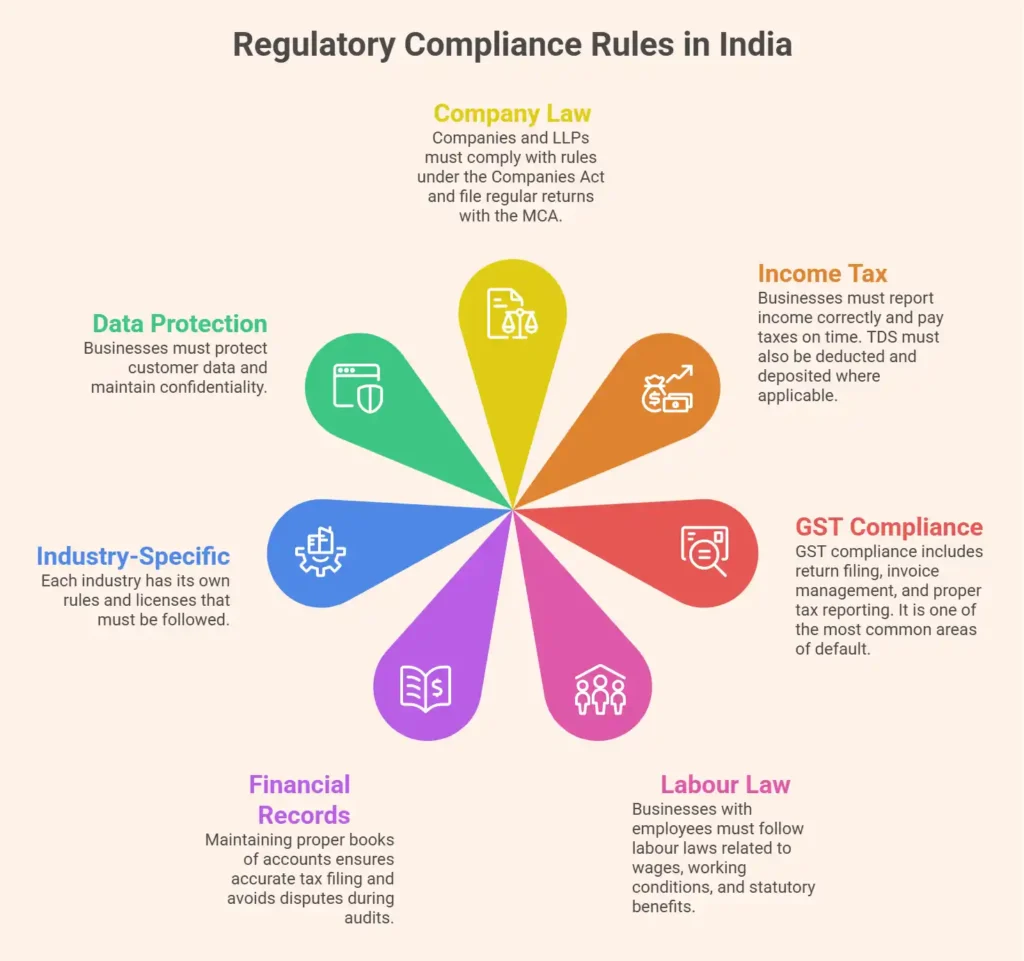
1. Company Law (ROC) Compliance
Companies and LLPs must comply with rules under the Companies Act and file regular returns with the MCA.
Key filings include:
- AOC-4 (Financial Statements)
- MGT-7 / MGT-7A (Annual Return)
- DIR-3 KYC (Director KYC)
Example:
If a company fails to file annual returns, heavy late fees apply, and the company may be marked inactive or struck off.
2. Income Tax & TDS Compliance
Businesses must report income correctly and pay taxes on time. TDS must also be deducted and deposited where applicable.
Example: If TDS is deducted from a professional but not deposited, interest and penalties will apply, increasing overall liability.
3. GST Compliance
GST compliance includes return filing, invoice management, and proper tax reporting. It is one of the most common areas of default.
Example: Filing GSTR-1 but not GSTR-3B can result in late fees and notices. Buyers may also lose input tax credit.
4. Labour Law Compliance
Businesses with employees must follow labour laws related to wages, working conditions, and statutory benefits.
Example: Not paying minimum wages or ignoring PF obligations can lead to inspections and penalties.
5. Financial Records & Audit
Maintaining proper books of accounts ensures accurate tax filing and avoids disputes during audits.
Example: If expenses are not recorded, profits appear higher, leading to increased tax liability.
6. Industry-Specific Compliance
Each industry has its own rules and licenses that must be followed.
Example: A food business needs FSSAI registration, while a contractor may need local authority approvals.
7. Data Protection Compliance
Businesses must protect customer data and maintain confidentiality.
Example: Sharing client data without consent can lead to legal consequences and loss of trust.
Compliance Requirements Based on Business Type
Compliance is not the same for every business.
- Freelancers: ITR, GST (if applicable)
- Partnership Firms: ITR, GST, basic records
- LLPs: ROC filings + tax compliance
- Private Limited Companies: Full compliance (ROC, GST, TDS, audit)
Understanding your business structure helps you manage compliance correctly.
Common Causes of Non-Compliance
Most businesses don’t default intentionally. Common reasons include:
- Missing due dates
- Poor bookkeeping
- Cash flow issues
- Lack of awareness
- Ignoring notices from authorities
Consequences of Non-Compliance
Non-compliance can lead to serious consequences:
- Late fees and penalties
- Interest on unpaid taxes
- Legal notices and scrutiny
- Cancellation of GST registration
- Company strike-off by MCA
- Loss of business credibility
Example: A business not filing GST returns for months may face registration cancellation and heavy penalties.
How to Stay Compliant
Compliance can be managed with a simple and consistent approach:
- Maintain a compliance calendar
- Keep records properly
- Review filings monthly
- Seek professional help when required
- Respond to notices on time
Conclusion
Regulatory compliance is essential for running a safe and successful business. It is not just about avoiding penalties but also about building credibility and trust. By understanding the basics and following a structured approach, even a small business owner can manage compliance effectively. Regular attention and discipline can prevent major issues and support long-term growth.
FAQs
1. What happens if a company does not follow regulatory compliance?
If a company fails to comply with legal requirements, it may face penalties, interest, legal notices, or even cancellation of registrations like GST.
2. Is regulatory compliance mandatory for small businesses?
Yes, compliance is mandatory for all businesses, regardless of size.
3. What are the most common compliance mistakes businesses make?
The most common mistakes include missing filing deadlines (GST, TDS, income tax), incorrect reporting, and not reconciling data like GSTR-2B.
4. How can a business check whether it is compliant or not?
A business can check its compliance status through government portals like the GST and Income Tax websites.
5. Can compliance be managed without a professional?
Basic compliance can be handled independently, but for accuracy and risk management, it is advisable to consult a professional, especially for complex areas like GST, TDS, and company law filings.