
Is your business ready for the biggest payroll shift in decades?
For years, Indian employers had to navigate 29 Central Labour Laws and 100+ State regulations, each with its own definitions and compliance rules. This fragmented system created confusion, compliance risks, and reduced long-term benefits for employees.
Now, with the introduction of the 4 New Labour Codes, the government has moved toward a simplified, transparent, and standardized framework that impacts PF, ESI, gratuity, and salary structuring.
Let’s break it down clearly.
Why Labour Law Reforms Were Introduced
Before jumping into PF, ESI, and gratuity changes, here’s the real reason behind these reforms.
Earlier:
- Multiple laws = multiple definitions of wages
- Employers structured salaries to reduce liabilities
- Employees received lower PF and gratuity benefits
Now:
- One uniform wage definition
- Reduced loopholes in salary structuring
- Better social security coverage
Key Objectives of Labour Law Reforms
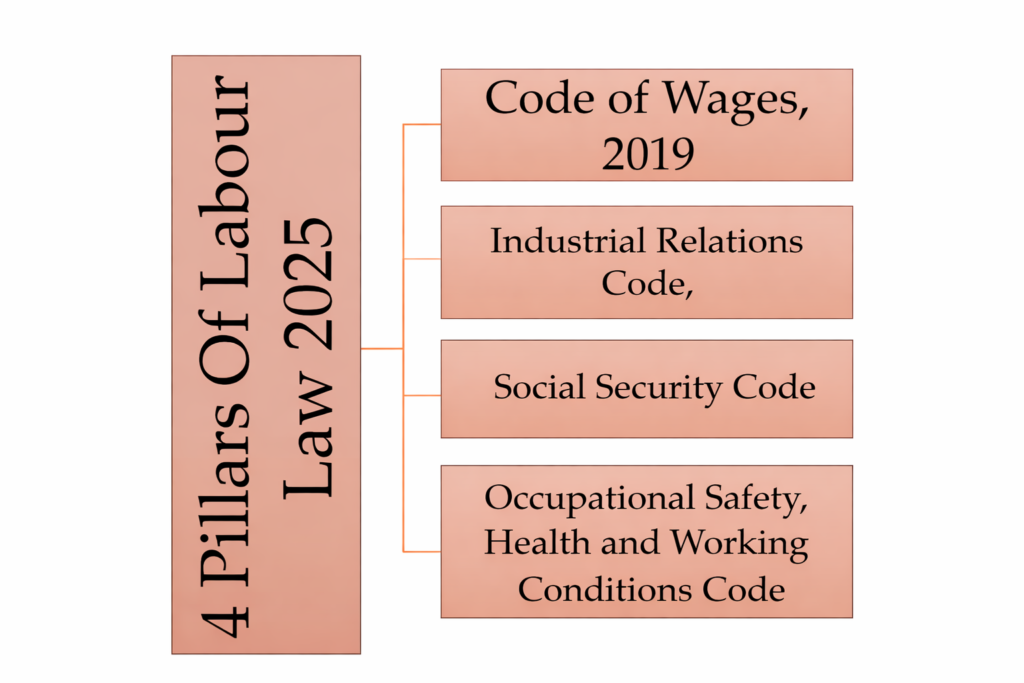
1. Uniform Definition of Wages
Different laws earlier defined wages differently. Now, a standard definition applies across PF, ESI, gratuity, and bonus.
2. Removal of Salary Structuring Loopholes
Employers could earlier reduce PF liability by inflating allowances. The 50% wage rule restricts this.
3. Simplified Compliance
Fewer registrations, fewer returns, and a more streamlined compliance system.
4. Better Employee Benefits
Higher PF contributions, better gratuity payouts, and improved retirement savings.
What is the New Definition of Wages?
Under the Code on Wages, 2019, wages now follow a uniform structure.
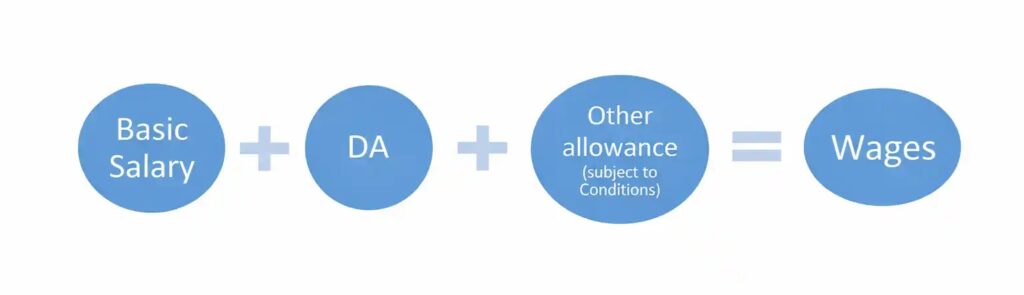
Included in Wages:
- Basic Salary
- Dearness Allowance (DA)
- Retaining Allowance
Excluded from Wages:
- HRA
- Bonus & Commission
- Overtime
- Conveyance Allowance
- Employer PF/ESI contribution
- Other reimbursements
The 50% Wage Rule (Most Important Change)
Here’s the game changer.
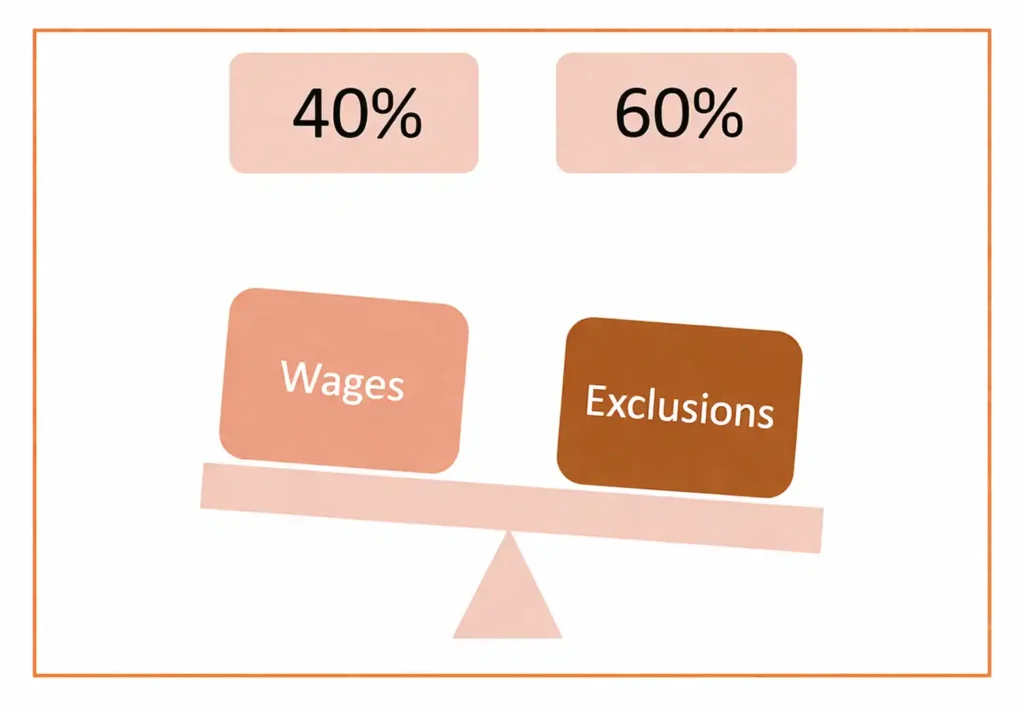
If exclusions (like HRA, bonuses, allowances) exceed 50% of total salary, the excess amount gets added back to wages.
What this means:
- Basic salary must be at least 50% of CTC
- PF and gratuity calculations increase
- Take-home salary may reduce slightly
- Long-term benefits increase
This rule directly impacts:
- PF calculation (new rules 2025)
- Gratuity calculation
- Bonus eligibility
Old vs New PF Calculation
PF Under Old Rules
- Calculated on: Basic + DA
- Contribution: 12% (Employer + Employee)
- Wage ceiling: ₹15,000
- Employers kept basic low to reduce PF
PF Under New Labour Codes
- Based on new wage definition (50% rule)
- Higher wage base = higher PF contribution
- Contribution % remains same (12% + 12%)
- Coverage may expand in future
Example
- Total Salary: ₹50,000
- Basic + DA: ₹20,000
- Allowances: ₹30,000
Since allowances exceed 50%, ₹5,000 gets added back.
Revised PF wage = ₹25,000
- Employee PF = 12% of Rs 25,000 = Rs 3,000/month
- Employer PF = 12% of Rs 25,000 = Rs 3,000/month
- Total monthly PF contribution = Rs 6,000
ESI Changes Under New Labour Codes
Old ESI Rules
- Applicable if salary ≤ ₹21,000
- Employer: 3.25%
- Employee: 0.75%
- Based on varying wage definitions
New ESI Framework
- Same contribution rates
- Uses uniform wage definition
- Salary restructuring may increase contribution base
Impact: Slight increase in ESI contributions due to higher wage base
ESI Calculation Example (New Labour Code):
- Revised wage = Rs 25,000
- Employee ESI = 0.75% of Rs 25,000 = Rs 187.50/month
- Employer ESI = 3.25% of Rs 25,000 = Rs 812.50/month
- Total ESI contribution = Rs 1,000/month
Note: The Rs 21,000 ESI eligibility threshold remains unchanged. However, because revised wages may increase due to the 50% rule, some employees previously within the Rs 21,000 limit may now exceed it and lose ESI coverage. Employers should review payroll to identify affected employees.
Gratuity Rule Changes (Major Shift)
Old Rule
- Minimum 5 years of service required
- Mostly applicable to permanent employees
New Rule
- Fixed-term employees eligible after 1 year
- Paid on pro-rata basis
- Permanent employee rule (5 years) remains
This is a big win for contractual and fixed-term employees
Formula:

The Verification
For a fixed-term employee earning Rs 25,000 wages after 1 year:
- (25,000 x 15 / 26) x 1 = 14,423.07
- Rounded: Rs 14,423
New Coverage: Gig & Platform Workers
For the first time, labour laws now include:
- Gig workers
- Platform workers (Uber, Swiggy, etc.)
Why this matters:
- Expands social security coverage
- Recognizes modern work models
- Opens door for future benefits
Fixed-Term Employment: Now Equal to Permanent Roles
Earlier:
- Limited benefits
- Treated similar to contract workers
Now:
- Equal wages and benefits
- Eligible for gratuity after 1 year
- Clearly defined employment terms
Final Thoughts: What This Means for You
The new labour laws are not just an update. They reshape how salaries, benefits, and compliance work in India.
For Employers:
- Higher compliance clarity
- Increased payroll cost (in some cases)
- Reduced structuring flexibility
For Employees:
- Higher PF savings
- Better gratuity benefits
- Improved financial security
FAQs
Basic wages must be at least 50% of total CTC. If allowances exceed 50%, the excess gets added back to wages, increasing PF and gratuity calculations.
PF rate stays at 12% + 12%. However the wage base increases due to the 50% rule, so monthly PF deductions and your retirement corpus both go up.
No. The Rs 15,000 ceiling remains unchanged. However the calculation base may increase as more components now count as wages.
Yes. For the first time, gig and platform workers are included under the Code on Social Security, 2020, making them eligible for future social security schemes.
No. Existing EPF accounts and UAN numbers remain unchanged. Only the wage calculation method changes.